Finasteride Results: A Timeline on How to Treat Hair Loss Felix Health
Table Of Content
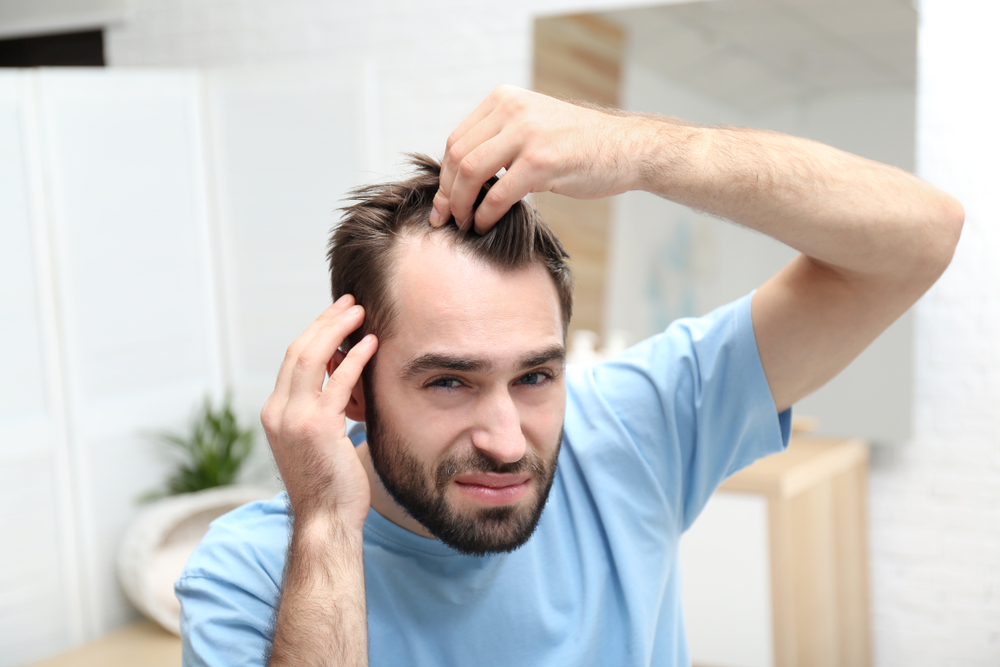
The dosage of Finasteride used to treat an enlarged prostate is 5mg, while 1mg is used to treat hair loss. Finasteride takes about three to four months to start working. Hair growth is a slow process, so there is no such thing as a quick fix when treating male-pattern baldness.
Two common conditions account for most age-related hair loss.
Discover how Finasteride works to regrow hair, see real patient results, and find out how to increase the chances of Finasteride regrowing your lost hair. There is no controlled data showing the efficacy of this product as an addition to specific treatments for hair loss conditions. A 2023 study found that participants given this supplement had a better response to hair treatments than those who received the treatments alone, but the study had several limitations. The study was not double-blind (double-blind means that neither the participants nor the researchers know which treatment the individual participants are receiving).
Teen Health: DIY Skin and Hair Care for Girls
This medication may increase your risk of getting some cancers, like breast cancer. Women who are pregnant or may get pregnant must not handle broken or crushed finasteride tablets. If a pregnant woman comes into contact with broken or crushed tablets she should check with her care team. Exposure to whole tablets is not expected to cause harm as long as they are not swallowed.
Medications & Supplements
These male pattern baldness patients have experienced substantial hair growth as a result of using Finasteride to treat hair loss. Henry says reducing stress with lifestyle changes and activities including meditation, yoga and exercise is key. "60 minutes of exercise can actually reduce signs and symptoms of female pattern hair loss," says Henry. Male-pattern hair loss is what causes a receding hairline and baldness in men. In women, female-pattern hair loss typically affects the crown or top of the head first, Mirmirani says.
Subscribe to MedicineNet's Skin Care & Conditions Newsletter
Hims Hair Loss Treatment: Review for 2024 - Healthline
Hims Hair Loss Treatment: Review for 2024.
Posted: Tue, 22 Jun 2021 17:38:39 GMT [source]
If you’re looking for an online prescription, you can get generic finasteride via Hims and other telehealth platforms, which require virtual consultations. It’s no wonder, then, that there are so many products and treatments designed to help with male hair loss. One of the most popular and effective medications is Propecia (the brand name of the drug finasteride). For men or those assigned male at birth, hair loss is very common. In fact, according to the National Library of Medicine, more than 50 percent over age 50 will be affected by male pattern baldness, or androgenic alopecia, in one way or another.

What should I watch for while using this medication?
Always consult your healthcare provider to ensure the information displayed on this page applies to your personal circumstances. Do not donate blood while you are taking this medication. This will prevent giving this medication to a pregnant female through a blood transfusion. Ask your care team when it is safe to donate blood after you stop taking this medication.
Other hair loss treatments are more expensive and invasive. The cost of hair transplants can vary wildly depending on where you go, but you may be looking at about $10,000 for transplants that treat male pattern baldness. In a one-year observational study, 62% of people reported a reduction in hair loss … but just 16% said it was “very effective” for hair regrowth.
“Your body’s immune system is attacking the hairs,” Brodell says. Hair loss, or alopecia, affects more than 80 percent of men and 50 percent of women, and the risk increases with age. If you started experiencing erectile dysfunction after starting Finasteride, you can continue your treatment, and use effective ED treatments like Viagra or Cialis alongside it. A physician may be able to advise you on what could be your best course of action. It’s a good idea to take some pictures of your hair before you start your treatment so you can keep track of your progress. At this stage, Finasteride will be working hard to stop testosterone from turning into DHT.
Do not take more of it, do not take it more often, and do not take it for a longer time than your doctor ordered. There are other drugs available to treat your condition. Talk to your doctor about other drug options that may work for you.
They typically discussed negative side effects, but it’s important to note that these side effects did not outweigh the improvement in the thickness of their hair. Reviewers who give the drug a lower rating described negative side effects, including weight gain, brain fog, and low libido. Those who rate Propecia on the higher end instead noted the lack of side effects and wrote about how impressed they were with its effectiveness.
It can also be more challenging to treat when compared to thinning at the top of the head if it becomes very advanced. Luckily, finasteride has been shown in clinical trials to be effective in treating hair loss in this region of the scalp. The key thing to remember is that treatment needs to be started early. If you’re noticing signs of thinning around your hairline, consider talking to your doctor to learn about your options for treatment. Remember that with androgenetic alopecia, hair loss tends to affect the vertex or crown (the top of the head) as well as the frontal scalp, commonly referred to as the hairline.
With less DHT in the system, hair follicles are not subject to this shrinkage process, so hair can continue to grow without becoming thinner and ultimately ceasing to grow all together. Some people also experience hair growth over time with regular use of finasteride. Finasteride works by preventing a hormone responsible for hair loss called dihydrotestosterone (DHT) from forming. It belongs to a class of drugs called 5-alpha-reductase inhibitors.
The bottom line is that finasteride is a useful tool to slow down hair loss, but if you want to boost its effectiveness, there may be other things, like the above, that you can try. Ask your healthcare provider to help decide if any of these options will work for you. We know that in general, the vertex region of the scalp responds very well to finasteride. An early study of finasteride showed that the medication is effective at promoting hair growth at the top of the head when compared to placebo.
Women may notice that their part is becoming wider or that their scalp is more visible. Finasteride works by stopping testosterone from being converted into DHT, a hormone responsible for many of male functions. This hormone is important in your teenage years, as it helps you develop through puberty. Testosterone can be detrimental to you as an adult and cause issues like male pattern baldness. By stopping testosterone from being converted into DHT, Finasteride contributes towards an overall lowering of DHT levels in the body. This will reverse or halt the development of male pattern baldness.
It is worth noting that finasteride must be taken continually for results to be maintained. Finasteride has been used by experts for three decades as an effective treatment for male pattern hair loss. One study indicated that 66% of men taking Finasteride each day for a two-year period saw hair growth improve substantially. But, equally as important, Finasteride can prevent hair loss in up to 90% of men, which is a fundamental assumption of the industry. In 1997, the Food and Drug Administration (FDA) approved finasteride to treat male pattern hair loss. Doctors often prescribe oral medications to be used along with topical minoxidil because studies show the combination boosts hair production.


Comments
Post a Comment